1979
Rock Against Racism
RAR NYC begins staging annual multi-genre concerts at the Naumburg Bandshell.
About Rap Against Rikers
Decades of music, activism, and resistance — returning to Central Park’s Naumburg Bandshell.
Why I’m producing Rap Against Rikers
My name is Kenny Toglia. I am the Executive Director of Ibogaine Works and a veteran of the medical cannabis movement, but my fight against the carceral state started long before that — forged directly in the cages of Rikers Island.
In August 1988, I was a 22-year-old activist with the Lower East Side Squatters Movement, organizing homeless people to take over the city’s abandoned buildings. When Mayor Koch tried to lock down our public spaces with a park curfew, we fought back. That protest became part of history when the NYPD rioted against the demonstration and the entire neighborhood.
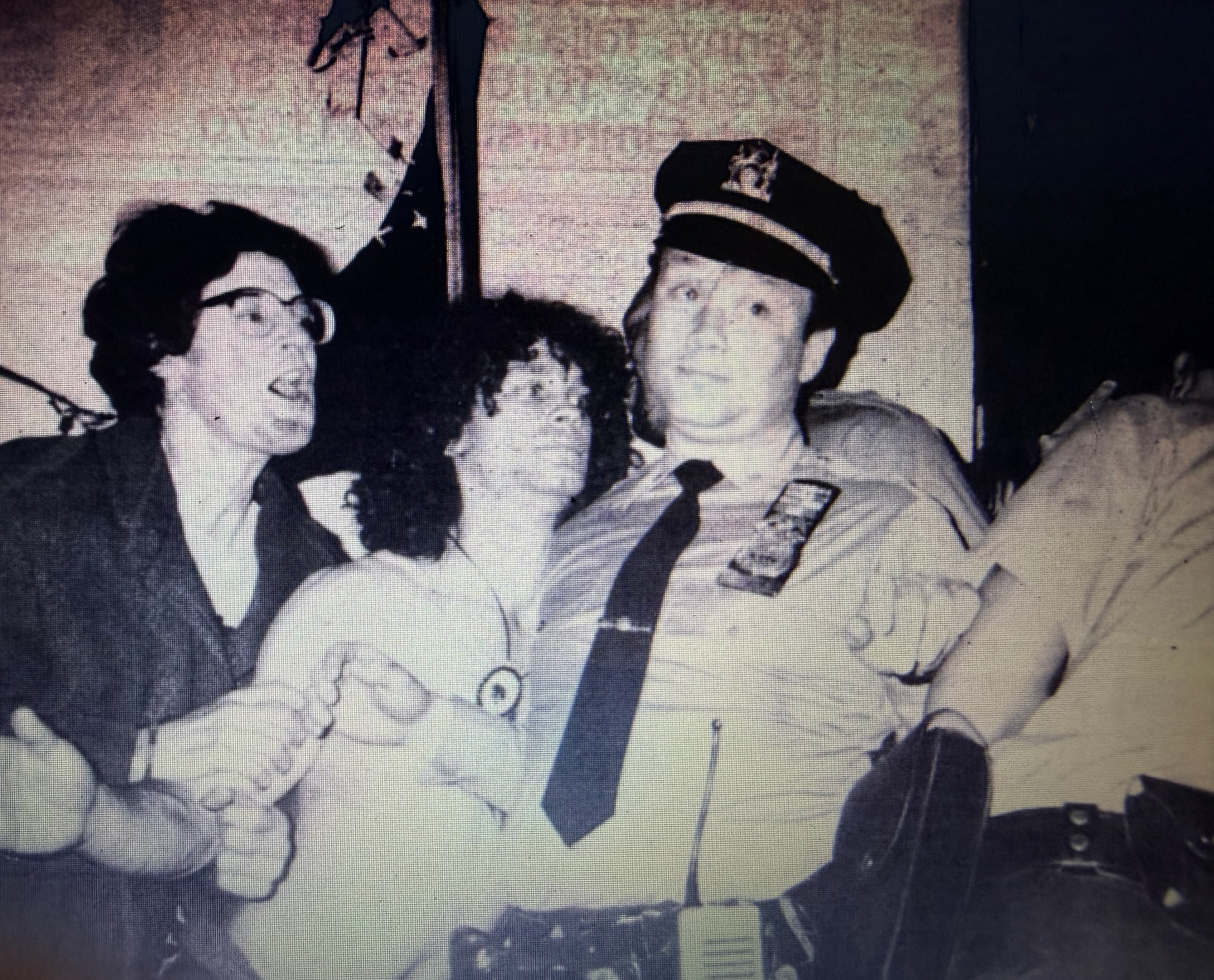
By May Day 1990, I was a pre-med student at City College and a young father, but I hadn’t stopped organizing. Invited to speak at the Resist to Exist concert in Tompkins Square Park, I watched police storm the stage to shut us down. While others took plea bargains, I refused. After a four-month trial, I stood alone among four activists to be convicted and sentenced to a year in New York City Jail.
Most of that year was spent locked in cages on Rikers Island and on a floating prison barge. Being locked in a cage is a kind of psychological torture — a modern revival of the British prison ships used during the American Revolution.
Long before I helped build the medical cannabis movement, and long before my work with Ibogaine Works, I learned the brutality of this system firsthand. My late mentor, Howard Lotsof, co-founded Rock Against Racism to prove that counterculture and direct action could shatter institutional power.
Rap Against Rikers carries that radical torch forward. We are mobilizing community power and art to dismantle this torture machine once and for all.
The story goes back further.
Rap Against Rikers draws inspiration from an earlier New York movement that brought grassroots political organizing and live music together at the very same venue: Rock Against Racism NYC.
The history
The history of Rock Against Racism in New York stands at a unique intersection of grassroots political organizing, multi-genre live music, and American constitutional law.
Following the rise of the original Rock Against Racism movement in the UK in 1976, local chapters began forming across the United States in the late 1970s. In New York, the movement took root within the radical counterculture and activist ecosystem of the Lower East Side.
A coalition of local organizers — including Dana Beal, Alan Thompson, Alice Torbush, editor of Overthrow magazine, and Howard and Norma Lotsof — helped establish RAR USA. They adapted the British model to address local social issues, centering their efforts on anti-racism, opposition to police brutality, free speech advocacy, and community solidarity.
While Thompson, Beal, and the Lotsofs worked on event logistics, coalitions, and organizing, Torbush used Overthrow as the movement’s primary print platform, promoting upcoming rallies, detailing political goals, and keeping the public informed as tension grew with city authorities.
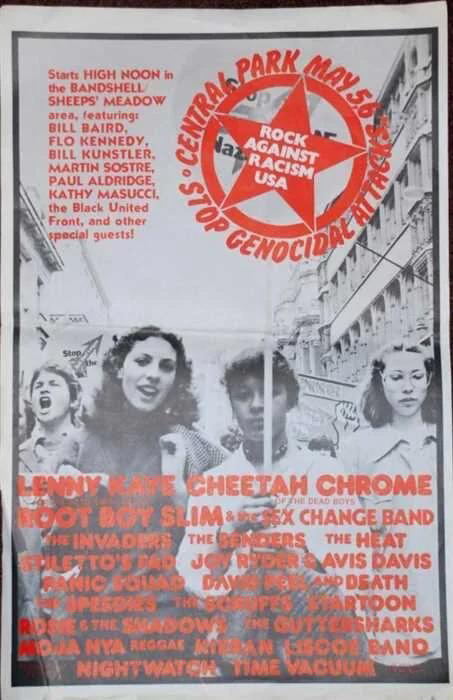
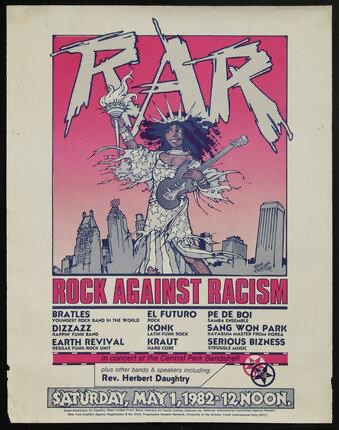
The defining venue for RAR NYC was the Naumburg Acoustic Bandshell in Central Park. Beginning in 1979, the group staged annual multi-genre concerts featuring punk, reggae, salsa, and rock bands.
To preserve the raw, authentic sound of the performances and maintain independent control over their message, RAR supplied its own sound equipment and mixing engineers for these events.
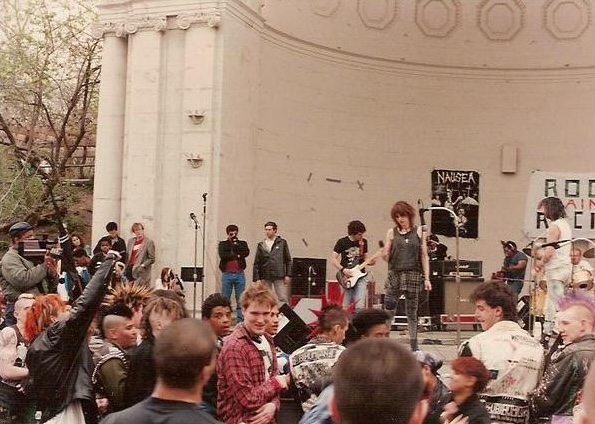
By the mid-1980s, the concerts had become the focal point of a major legal dispute. Citing noise complaints from nearby park users and surrounding neighborhoods, New York City instituted a new Use Guideline for the Naumburg Bandshell. It required event sponsors to use a city-provided sound system and a city-employed sound technician with master control over volume and the sound mix.
RAR challenged the guideline in court, arguing that forcing a political music group to hand over sound control to a government employee constituted an unconstitutional prior restraint on free expression.
The case reached the U.S. Supreme Court in 1989 as Ward v. Rock Against Racism (491 U.S. 781). In a 6–3 ruling, the Court decided in favor of New York City. Writing for the majority, Justice Anthony Kennedy held that the sound rule was a valid, content-neutral “time, place, and manner” restriction aimed at controlling noise pollution rather than suppressing speech.
Although the legal ruling ultimately favored the city’s regulatory power, the efforts of the RAR NYC organizers permanently etched their street-level movement into the annals of First Amendment jurisprudence.
One bandshell. Decades of action.
1979
RAR NYC begins staging annual multi-genre concerts at the Naumburg Bandshell.
1989
Ward v. Rock Against Racism reaches the U.S. Supreme Court and becomes part of First Amendment jurisprudence.
2026
Music and activism return to the Naumburg Bandshell with a new generation organizing for justice.